Life Settlements Blog
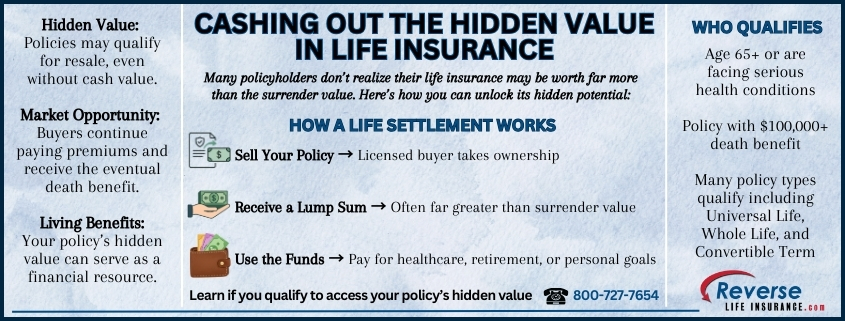
Infographic explaining how cashing out the hidden value in life insurance works including the process and benefits

Cashing out the hidden value in life insurance is a strategy many policyholders overlook. Most people assume their policy only provides benefits after death, but the truth is that it can also serve as a living financial resource. Through a life settlement, you may be able to sell your policy for a cash payout that far exceeds the surrender value offered by the insurance company.

Why Life Insurance Has Hidden Value

Life insurance policies, especially permanent and convertible term policies, can hold financial value that isn’t immediately obvious. Some policies accumulate cash value, while others may qualify to be sold in the secondary market. Investors purchase these policies, continue paying the premiums, and receive the eventual death benefit.

For policyholders, this creates an opportunity. Instead of walking away with little or nothing when a policy is no longer needed, selling it to a direct buyer through a life settlement can unlock far more than what the insurance company would pay out in surrender value.

What It Means to Cash Out Through a Life Settlement

A life settlement involves selling your life insurance policy to a licensed buyer in exchange for a lump-sum payment. Once the sale is complete, the buyer takes over responsibility for premium payments and becomes the new owner and beneficiary. The policyholder receives immediate cash, which can be used for:

  • Covering healthcare or long-term care costs
  • Paying off debt or household expenses
  • Supplementing retirement income
  • Funding lifestyle goals or personal priorities

Unlike borrowing against your policy or making withdrawals, this option completely transfers ownership and premium responsibility to the buyer.  If your policy qualifies, you may even be eligible for a retain a portion settlement where you keep part of the death benefit for your family while the buyer still takes over premium payments. 

Who Qualifies to Access This Hidden Value

Not every policy qualifies for a life settlement, but many do. Common eligibility factors include:

  • Policyholder age, often 65 or older, or having a serious health condition
  • A policy with a death benefit of $100,000 or more
  • Permanent coverage types (universal, whole life) or term policies that are convertible

Even policies with little or no cash surrender value may still qualify, making it worthwhile to explore the option.  Because every case is unique, it is always best to call. 

Why Policyholders Consider This Option

The reasons people choose to cash out vary, but they usually center on changing financial needs. Some policyholders no longer want to pay premiums, while others realize the original purpose of the policy, such as providing for dependents, is no longer relevant.

For many, selling a policy creates the flexibility to cover current expenses. A settlement can mean the difference between struggling to keep up with bills and having funds available to improve quality of life.

Taking the Next Step

If you are considering cashing out the hidden value in life insurance, the first step is to request a no-obligation appraisal of your policy. This evaluation will show whether your coverage qualifies for a life settlement and how much you could potentially receive.

To learn if you qualify, please give us a call at 800-727-7654

Infographic explaining how people with cancer sell life insurance for cash to cover treatment costs, loss of income, and household expenses

For people living with cancer, the financial impact of treatment and daily expenses can feel overwhelming, making it important to know what options exist.  One of the most overlooked options is the ability to sell a life insurance policy. Understanding how people with cancer sell life insurance for cash can help families reduce financial stress and focus more on treatment and quality of life. This option, known as a viatical settlement, allows policyholders to access immediate funds instead of holding onto a policy that may otherwise lapse or provide no current benefit.

What It Means to Sell a Life Insurance Policy

Selling a life insurance policy involves transferring ownership of the policy to a licensed buyer in exchange for a lump sum payment. The buyer takes over premium payments and becomes the beneficiary. For someone with cancer, this can mean turning an unused or burdensome policy into money that can be used right away for care, bills, or other personal needs. A viatical settlement often results in a much larger payout than borrowing against a policy or surrendering it to the insurance company.

Why Cancer Patients Consider This Option

The financial impact of cancer is significant. Between medical treatments, travel costs, reduced income, and daily living expenses, it can feel impossible to stay ahead. Selling a life insurance policy can provide:

  • Immediate cash to pay for treatments or cover household expenses
  • Relief from premium payments if maintaining the policy has become unaffordable
  • Flexibility to use the funds however they are needed, from medical bills to alternative therapies to family experiences

For many, the ability to turn an intangible asset into money today is a life-changing opportunity.

Eligibility Factors

Not every policy qualifies, but many do. Generally, the following factors are reviewed:

  • The type of policy, such as term, universal, or whole life
  • The face value or death benefit amount
  • Premium costs and payment history
  • The health status of the insured

Cancer patients often qualify because buyers evaluate life expectancy and policy value to determine an offer. Even term policies that are approaching expiration may still be eligible to sell, depending on their terms and conversion options.

The Process Step by Step

  1. Initial review: The policyholder provides basic information about the insurance contract and health condition.
  2. Valuation: Direct buyers evaluate the policy’s potential market value.
  3. Offer: If eligible and there is buyer interest, the policyholder receives an offer to purchase the policy.
  4. Sale and transfer: Once accepted, contracts are completed and ownership of the policy is transferred and the lump sum payment is made.

Using the Proceeds

The payout from selling a life insurance policy can be used in whatever way is most helpful. Some people choose to put the money toward medical treatment or in-home care, while others use it to cover household expenses or spend meaningful time with loved ones. The flexibility to decide how the funds are used is what makes this option so valuable.

Is It the Right Choice?

For people with cancer, selling a life insurance policy can provide cash when it is most urgently needed. The payout can be directed toward medical care, household expenses, or time with loved ones. Selling allows the policy to serve a practical purpose during life, offering financial help at a time when it can make the greatest difference.

To learn if you qualify, please give us a call at 800-727-7654.

Infographic explaining the benefits of using a life settlement to cover dementia care costs

Caring for someone with dementia often comes with overwhelming emotional and financial challenges. Families frequently find themselves balancing the rising cost of long-term care with limited resources. Using a life settlement to cover dementia care costs can provide much needed financial relief, turning an existing life insurance policy into funds that directly support patient needs. Life settlements can provide a way to afford quality care without sacrificing other family assets.

The Financial Burden of Dementia Care

Dementia care is among the most expensive forms of long-term care. According to national studies, the costs can exceed $5,000 to $8,000 per month for memory care facilities.  In home care often cost just as much when specialized care is required. Medicare coverage is limited, and while Medicaid may help, it often requires families to “spend down” assets first. This leaves many patients and their loved ones searching for alternatives that allow them to access funds without depleting savings or retirement accounts.

What Is a Life Settlement?

A life settlement is the sale of an existing life insurance policy to a third-party buyer. In exchange, the policyholder receives a cash payment that is typically far greater than the policy’s surrender value, but less than the death benefit. The buyer takes over premium payments and receives the death benefit when the insured passes away.

For dementia patients and their families, this option creates immediate liquidity. Instead of continuing to pay premiums on a policy that may no longer fit their financial goals, they can redirect the value of the policy toward urgent care needs.

Why Dementia Patients May Qualify

Dementia, particularly in its advanced stages, is a progressive condition that often makes patients eligible for a life settlement. Buyers evaluate policies based on factors such as:

  • Life expectancy – Advanced dementia can shorten life expectancy, which makes policies more attractive to buyers as a return on investment may be realized sooner.
  • Policy type and size – Larger policies, especially guaranteed universal life policies, often yield higher offers.  Some term policies may also qualify for a term life insurance settlement if they are still convertible. 
  • Premium costs – Lower ongoing premiums generally make a policy more valuable to life settlement buyers.

Eligibility depends on a combination of health factors and policy details, so each case is reviewed individually.  If you aren’t sure whether your policy qualifies, it is always best to ask, so please just give us a call. 

How Funds Can Be Used

One of the main benefits of using a life settlement to cover dementia care costs is flexibility. Unlike Medicaid or certain government programs, there are no restrictions on how the funds must be used. Families caring for someone with dementia often put the proceeds toward:

  • Memory care facility costs
  • In-home caregiving services
  • Respite care for family caregivers
  • Medical bills or prescription expenses
  • Home modification to improve safety and accessibility

This flexibility allows families to adapt to the evolving needs of dementia care, which often change as the disease progresses.

Comparing Alternatives

Families exploring options to fund dementia care may also consider:

  • Reverse mortgages – Can provide cash but reduce home equity.
  • Long-term care insurance – Only helps if a policy was purchased years in advance.
  • Borrowing against the policy – Provides some funds, but does not unlock the full value of the death benefit.  Always get a policy appraisal so that you know the potential value of your policy in the secondary market for life insurance before proceeding with a policy loan or surrender.

Compared to these, a life settlement can often generate a much larger immediate payout, especially if the policyholder no longer needs to maintain coverage for beneficiaries.

Important Considerations

While life settlements can be a valuable tool, families should carefully evaluate:

  • Tax implications – Life settlement proceeds may be taxable depending on circumstances.  For those with a shorter life expectancy who qualify for a viatical settlement, proceeds are typically not taxed.
  • Impact on benefits – Receiving a large cash payment can affect Medicaid eligibility.
  • Loss of death benefit – Beneficiaries will no longer receive the policy’s payout.

Because dementia is a condition that requires long-term planning, families should weigh these factors alongside the immediate benefits of having cash available for care.

Accessing Funds for Dementia Care

The cost of dementia care can place a heavy financial strain on families. By using a life settlement to cover dementia care costs, policyholders can turn an existing life insurance policy into an immediate source of funding. This option provides flexibility, access to quality care, and relief from ongoing premium obligations.

In a short 5-10 minute phone call, find out if accessing cash from an existing life insurance policy to pay for dementia care is an option for you.  To learn if you or your loved one qualifies, please give us a call at 800-727-7654

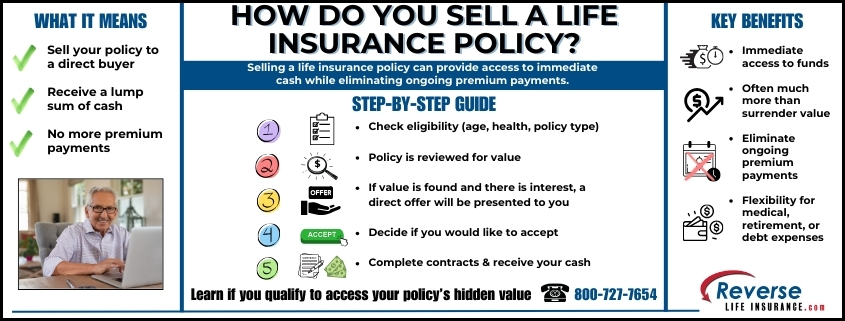
Infographic explaining how do you sell a life insurance policy, with sections on what it means, a step-by-step guide, and key benefits

A life settlement can provide a way to access the hidden value in a life insurance policy. It allows policyholders to sell their coverage to a direct buyer in exchange for a cash payment that is often significantly higher than the policy’s surrender value. Many times, people consider this choice when premiums have become difficult to manage, when their financial needs change, or when the policy is no longer needed for family or estate protection. Selling a policy can turn something that would otherwise be surrendered or allowed to lapse into an important financial resource. But how do you sell a life insurance policy? The process is more simple and straightforward than many realize.

Understanding the Basics

Selling a life insurance policy is not the same as canceling it with your insurance company. When you choose to sell your policy through a life settlement, ownership and beneficiary rights are transferred to a life settlement purchaser. In return, you receive a lump sum cash payment. From that moment forward, the buyer takes over premium responsibilities and eventually collects the death benefit.

Not all policies are eligible, but many types can qualify, including universal life, whole life, and even term policies in certain situations. The most common reasons people consider selling include:

  • High premium costs that are no longer affordable
  • A policy that is no longer needed for family or estate protection
  • A desire to access funds for retirement, healthcare, or other expenses
  • A better alternative to letting the policy lapse

Step-by-Step Guide to Selling a Life Insurance Policy

If you are considering this option, the following steps outline the process:

  1. Check eligibility – Factors such as your age, health status, and policy size will determine whether you qualify. Seniors over 65 or those with serious health conditions are often the best candidates.
  2. Get a policy appraisal – A direct buyer will review your policy to determine its potential market value. This assessment takes into account your life expectancy, policy type, death benefit, and premium obligations.
  3. Receive an offer – If value is found and there is interest, a direct offer will be presented to you.  When you receive a direct offer through our platform, you will never need to deduct broker fees. 
  4. Decide if you would like to accept – If the offer makes sense for your financial needs, you can agree to the sale. Legal documents are prepared to transfer ownership and release you from future premium payments.
  5. Collect your cash – Once the paperwork is finalized, settlement funds are released to you in a lump sum.

Key Benefits of Selling

Selling a life insurance policy can provide immediate access to funds. Many people use the proceeds to:

  • Cover long-term care or medical costs
  • Pay down debt
  • Supplement retirement income
  • Reinvest in other financial strategies

The transaction also eliminates ongoing premium obligations, freeing up income for other expenses.

Considerations Before You Sell

Although selling your life insurance policy can be highly beneficial, there are some important points to consider:

  • Tax implicationsAre life settlement proceeds taxed? Depending on your settlement amount and policy basis, you may owe taxes on part of the proceeds.
  • Impact on beneficiaries – Once sold, your family or loved ones will no longer receive the death benefit.

In many cases, the benefits of an immediate lump sum of cash provide far greater value than keeping a policy you no longer need, making a life settlement a worthwhile option for many policyholders.

Is Selling Your Life Insurance Policy Right for You?

Selling a life insurance policy is a decision that can bring financial relief and flexibility. By learning the process and considering your options, you can decide whether a life settlement is the right choice for your situation. If you find yourself asking, “How do you sell a life insurance policy?”, the steps outlined in this guide can help you take the next step toward unlocking the hidden value in your coverage.

To learn if you qualify, please give us a call today at 800-727-7654.

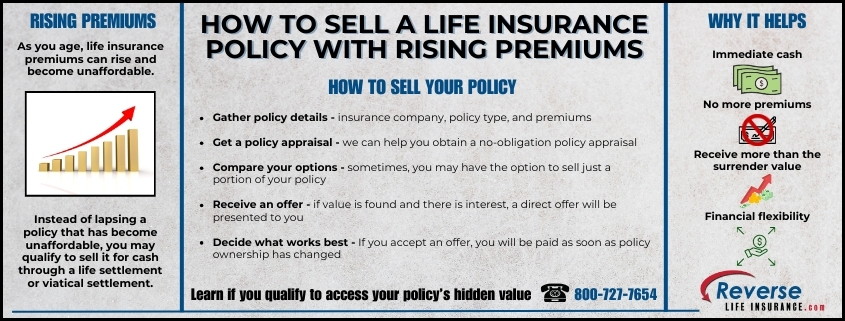
Infographic on how to sell a life insurance policy with rising premiums, showing main steps and key benefits.

For many seniors, one of the biggest financial challenges in retirement is the cost of keeping life insurance coverage. Premiums that once seemed affordable can steadily increase over time, sometimes becoming unmanageable. If you find yourself in this situation, you may be wondering how to sell a life insurance policy with rising premiums. A life settlement offers a practical solution that allows you to convert your policy into cash, eliminating the burden of escalating payments while putting money back into your pocket.

Why Premiums Rise in Later Years

Life insurance is designed to provide peace of mind, but as policyholders age, the cost of coverage often climbs. With term policies, premiums typically increase when the initial level period ends and the policy renews on an annual basis. Permanent policies, such as universal life, may also see cost adjustments as mortality charges and administrative fees rise. These changes can make it difficult for seniors to justify keeping the policy, especially if the original purpose such as income replacement or protecting young dependents is no longer relevant.

The Problem with Letting a Policy Lapse

When premiums become too expensive, many policyholders simply stop paying. Unfortunately, allowing a policy to lapse means walking away from years of investment without receiving anything in return. Even surrendering a permanent policy for its cash value rarely provides much benefit, as surrender values are usually lower than what could be obtained through a life settlement. For those struggling with premium costs, selling the policy instead of abandoning it can unlock significant value.

How a Life Settlement Works

A life settlement is the sale of an existing life insurance policy to a life settlement buyer. In exchange for transferring ownership and beneficiary rights, the policyholder receives a lump sum of cash that is typically far greater than the surrender value offered by the insurance company. Once the sale is complete, the investor assumes responsibility for all future premiums and becomes the beneficiary of the policy.

This arrangement benefits seniors who no longer want or need to maintain coverage. Instead of paying rising premiums, you gain immediate liquidity that can be used for medical expenses, long-term care, debt repayment, or simply to enhance your quality of life in retirement.

Who Qualifies to Sell a Life Insurance Policy

Eligibility for a life settlement is based on several factors, including age, health condition, and the type and size of the policy. Generally, policyholders over the age of 65 with coverage of $100,000 or more may qualify. Those facing health challenges or reduced life expectancy may receive higher offers, since investors weigh the risk of continuing premium payments against the expected payout.

Even if you are in relatively good health, rising premiums alone can make selling an attractive option. Policies that have become too expensive to keep may still hold significant market value.

Steps to Sell a Life Insurance Policy with Rising Premiums

  1. Review Your Policy – Gather details about the type of coverage, face value, and current premium costs.
  2. Obtain a Policy Appraisal – Just like real estate, a life insurance policy can be appraised to determine its market value.
  3. Compare Options – Evaluate the difference between surrendering the policy, letting it lapse, or selling it through a life settlement.
  4. Get a Settlement Offer – If value is found and there is interest, a direct buyer may present a cash offer to you.
  5. Decide What Works Best for You – If you decide to sell your policy, you will receive a lump sum of cash and will no longer be responsible for premium payments.

Benefits of Selling a Policy

Selling your life insurance policy provides multiple advantages. You gain immediate cash that can be used for essential or discretionary needs. You eliminate the ongoing obligation of premium payments. You gain flexibility to cover healthcare, living expenses, or to support loved ones. You typically receive much more for life settlements vs surrender value offered by the insurance company.

Making an Informed Decision

Deciding to sell a life insurance policy is a major financial choice, and it should be made after reviewing your needs and alternatives. For many seniors, though, the advantages are clear. Rising premiums can drain retirement savings and create unnecessary stress. A life settlement transforms an unaffordable policy into a financial resource that provides real value.

Is Selling Your Policy an Option?

Learning how to sell a life insurance policy with rising premiums is about more than just getting rid of a financial burden. It is about turning an expense into an asset. Instead of struggling with unaffordable payments or letting your policy lapse, you can unlock its hidden value and put that money to work for your needs today.

Whether you are facing increased healthcare costs, planning for long-term care, or simply want more financial flexibility in retirement, selling your life insurance policy can be the solution. By exploring a life settlement, you not only free yourself from the stress of escalating premiums but also gain the peace of mind that comes with knowing you made the most of your policy.-

To learn if you qualify and to obtain a no-obligation policy appraisal, please contact us at 800-727-7654.  It usually only takes a 5-10 minute phone call to learn if you may be eligible to access your policy’s hidden value as cash today.

Life settlements for heart attack survivors infographic showing how policies can be turned into cash, the benefits during recovery, and the financial impact for survivors.

Experiencing a major health event often forces people to reexamine both their health and their finances. Life settlements for heart attack survivors provide one option for policyholders who no longer need or can no longer afford their life insurance coverage. By selling an existing policy, heart attack patients can receive an immediate cash payout that is usually much higher than the policy’s surrender value. It can reduce financial pressure, allowing survivors to focus on their health.

What Is a Life Settlement?

A life settlement is the sale of a life insurance policy to an institutional buyer or investor. Instead of lapsing the policy or surrendering it to the insurance company, the policyholder sells it for a lump sum. The buyer becomes the new policy owner, assumes responsibility for future premium payments, and eventually collects the death benefit. This transaction allows the original policyholder to access the hidden value of the policy while still alive.

Why Heart Attack Survivors May Qualify

Buyers in the secondary market for life insurance look at several factors when determining whether to purchase a policy. The insured’s health history, including major events such as a heart attack, plays an important role in the evaluation. Survivors often face higher long-term health risks, which can increase the value of their policy to buyers.

Other factors also matter, such as:

  • The face value of the policy
  • The cost of ongoing premiums
  • The type of policy (universal life, whole life, or convertible term most often qualify)
  • The insured’s age and overall medical history

Because heart attack survivors often have documented health conditions, they may qualify for stronger settlement offers than individuals in excellent health.

Financial Benefits of Selling a Policy After a Heart Attack

Choosing to sell a policy can provide several important benefits:

  • Immediate Access to Cash – Settlement funds can be used for medical expenses, household bills, or debt repayment.
  • Relief From Premium Payments – The new policy owner assumes the financial obligation of paying premiums, which can free up significant monthly income.
  • Greater Value Than Surrender – Settlements typically provide payouts that are several times higher than a cash surrender value.
  • Support for Lifestyle Changes – Survivors may wish to reduce work hours, relocate, or access additional healthcare, and a life settlement provides the financial flexibility to make these changes.

When a Life Settlement May Make Sense

Selling a life insurance policy is not the right choice for everyone. However, a life settlement or a viatical settlement are worth considering in situations such as:

  • Premium payments are creating a financial burden.
  • The policy is no longer needed for family or business protection.
  • Health challenges have increased the policy’s market value.
  • The insured is considering surrendering or letting the policy lapse.

Heart attack survivors may also weigh whether their family members still need the death benefit or whether immediate access to cash will provide a more meaningful benefit.

What to Expect from the Process

The process of selling a policy usually begins with an application and medical records review. Potential buyers will review details about the insured’s health, the type of policy, and its current status. An appraisal is performed, and offers are made based on this evaluation. If the policyholder accepts an offer, the ownership is transferred, and funds are paid out in a lump sum.

This process can often be completed in just a few weeks, providing quick access to money that would otherwise remain locked inside the policy. For heart attack survivors facing mounting expenses or reduced income, the speed of a life settlement can make it an attractive option.

Is a Life Settlement Right for You?

A life settlement gives heart attack survivors the opportunity to unlock the value of their policy and put those funds toward immediate needs. It also offers flexibility, whether that means covering medical expenses, supplementing retirement income, or easing the cost of long-term care. By reviewing available options, survivors can decide if selling their policy is the right step for their financial situation.

To learn if you qualify, please give us a call today at 800-727-7654

Infographic explaining how a life settlement for term insurance can provide cash to qualifying policyholders with convertible term policies, including eligibility criteria, process steps, and key benefits.

Many policyholders are surprised to learn that a life settlement for term insurance may be possible. While term policies typically do not build cash value, they can sometimes be sold for a lump sum if the policy includes a conversion option and the insured has a qualifying health condition.

Can You Sell a Term Life Insurance Policy?

Most term policies cannot be sold on the secondary market unless they include a conversion privilege. This feature allows the policy to be converted into permanent coverage, which meets the requirements of most life settlement buyers. However, the policy does not always need to be converted in advance. It only needs to be eligible for conversion to be likely to qualify for a life settlement.

Buyers may also consider term policies that remain in force beyond the level term period, such as annual renewable term policies. If premiums are being paid and the insured meets the usual health and age criteria, a sale might still be possible.

Key Factors That Determine Eligibility

Several factors influence whether a term policy may qualify for a life settlement:

  • Conversion deadline: Many term policies have a limited window during which they can be converted. If that window has passed, the policy may no longer be eligible
  • Insured’s health: Life expectancy is a major factor. Policies held by individuals with serious health conditions tend to be more attractive to buyers
  • Policy size: Most buyers look for policies with a death benefit of at least $100,000
  • Age of the insured: Seniors over the age of 65 are most likely to qualify, but exceptions may apply.  Younger insureds with significant health concerns can qualify.

What Is the Process?

The process begins with a review of your policy and some basic health information. If the policy has a conversion option and you meet other eligibility criteria, buyers be interested and make you an offer.

If you accept an offer, the direct buyer takes over premium payments and receives the death benefit in the future. You receive a lump-sum cash payout now.

Why Consider Selling a Term Policy?

Many people let term policies lapse once they are no longer needed or become too expensive. If your policy qualifies for a life settlement, it may offer:

  • A cash payout that can be used for any purpose
  • Relief from paying future premiums
  • Greater financial flexibility during retirement or illness

Selling a term policy can be a practical way to unlock value from coverage that would otherwise expire unused.

Check Before You Let It Lapse

Before you stop paying premiums or allow a term policy to expire, find out whether you may qualify for a term life insurance settlement. A quick policy review could reveal unexpected value, especially if your coverage includes a conversion option and your health has changed since the policy was issued.

Many people simply cancel their expiring term policies at the end of the term as premiums can steeply rise after the initial term period.  A life settlement for term insurance may allow you to access your policy’s hidden value rather than throwing it away.  Please give us a call at 800-727-7654 to learn if you qualify. 
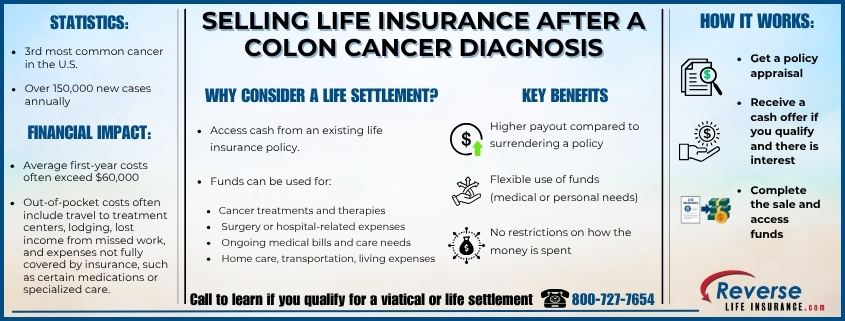
Infographic explaining selling life insurance after a colon cancer diagnosis, highlighting treatment costs, financial challenges, and benefits of a life settlement

A colon cancer diagnosis can create overwhelming financial strain, from the costs of specialized treatments to the impact of missed work and daily living expenses. Selling life insurance after a colon cancer diagnosis allows policyholders to unlock the value of a policy they may no longer need or can no longer afford. Instead of surrendering or lapsing the policy, a life settlement can provide a lump sum that can be used for medical expenses, home care, or other personal needs.

How a Life Settlement Can Help Colon Cancer Patients

A life settlement is the sale of an existing life insurance policy to a third party buyer for a cash payout. This payout is typically much larger than the surrender value and can be a valuable tool for patients facing the financial burden of cancer treatment. Factors such as the policy type, face value, premiums, and your overall health (including the stage and prognosis of your colon cancer) influence the amount you may receive.

Many patients use this payout to cover out-of-pocket medical expenses, reduce financial stress, or even fund alternative treatments not covered by insurance. By converting a life insurance policy into cash, patients gain immediate financial flexibility at a time when it is needed most.

Colon Cancer Treatments and Related Costs

Treatment for colon cancer varies based on the stage of the disease and the patient’s overall health. Even with health insurance, the cost of treatment can be significant due to co-pays, deductibles, and uncovered services. Life settlements can help ease this financial pressure.

Common treatments for colon cancer include:

  • Surgery: Procedures like colectomy, segmental resection, or laparoscopic surgery are often the first step for localized colon cancer. These surgeries can cost tens of thousands of dollars, especially when hospital stays and recovery are factored in.
  • Chemotherapy: Drugs such as 5-fluorouracil (5-FU), capecitabine (Xeloda), oxaliplatin (Eloxatin), and irinotecan are commonly used. Chemotherapy is often given in cycles over several months, with costs varying widely depending on the drug regimen and the number of sessions.
  • Targeted Therapy: Medications like bevacizumab (Avastin), cetuximab (Erbitux), and panitumumab (Vectibix) target specific cancer cells and are often used in advanced cases. These treatments can be expensive but have improved outcomes for many patients.
  • Immunotherapy: Drugs such as pembrolizumab (Keytruda) and nivolumab (Opdivo) may be recommended for certain advanced or recurrent colon cancers. Immunotherapy often comes with a high price tag, making additional funding sources valuable.
  • Radiation Therapy: While not always standard for colon cancer, radiation is sometimes used to shrink tumors before surgery or to treat cancer that has spread.
  • Clinical Trials and Emerging Therapies: Many patients explore new drug combinations or innovative treatments through clinical trials. While some trials cover the cost of experimental drugs, other associated costs such as travel, imaging, and labs may not be fully reimbursed.

These treatments can lead to related expenses like genetic testing, specialized diets, rehabilitation, or supportive care medications for side effects, which add to the financial burden.

Benefits of Selling Life Insurance After a Colon Cancer Diagnosis

A life settlement or viatical settlement can help patients:

  • Cover Medical Bills: Use funds for costs not fully covered by health insurance such as chemotherapy, targeted therapies, immunotherapy, or unexpected hospitalizations.
  • Pay for Home and Palliative Care: Many patients need in-home nursing care or assistance during recovery, which can be costly.
  • Manage Daily Expenses: Mortgage payments, transportation to treatment centers, or basic living costs can be handled without depleting savings.
  • Explore Alternative or Complementary Treatments: Some patients choose to use their funds for integrative therapies, holistic care, or travel for specialized treatment centers.

Is a Life Settlement the Right Choice?

While selling your policy can provide significant financial relief, it also means giving up the future death benefit your beneficiaries would receive. Policyholders should review the specifics of their coverage, consider whether they still need the policy, and weigh the benefits of immediate cash against their long-term estate plans. For many patients, the financial freedom and stress reduction during treatment make a life settlement the right choice.

To learn more about your options for accessing the hidden value in your life insurance policy, please give us a call at 800-727-7654.

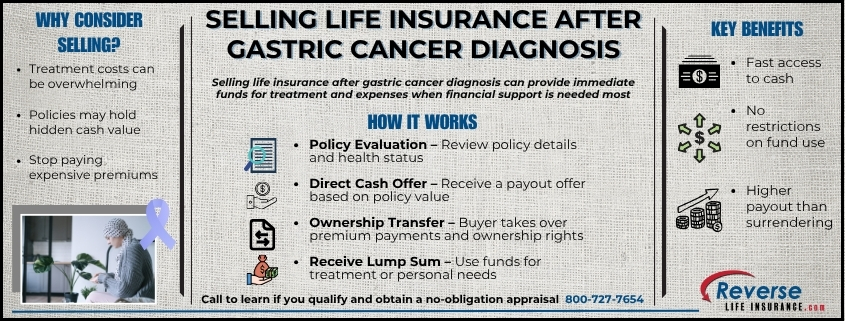
Infographic explaining selling life insurance after gastric cancer diagnosis, highlighting why to consider selling, how the process works, and key benefits

A gastric cancer diagnosis can be overwhelming, not only emotionally but also financially. The cost of treatment, medications, travel for specialized care, and day-to-day living expenses can place a heavy burden on patients and their families. Selling life insurance after gastric cancer diagnosis is one option that many people do not realize is available. By selling your existing policy, you can unlock its value and gain immediate funds that can help cover the high costs of care or provide financial stability during a difficult time.

Understanding Gastric Cancer Costs

Gastric cancer, also known as stomach cancer, often requires a combination of treatments such as surgery, chemotherapy, targeted therapy, and radiation. These treatments can span several months or longer and often come with significant out-of-pocket expenses. Even patients with comprehensive health insurance may face high deductibles, co-pays, or costs for medications and supportive therapies that are not fully covered.

In addition to direct medical expenses, many patients and families experience a loss of income due to time away from work. When these financial challenges are combined with the physical and emotional toll of cancer treatment, it is no surprise that many people begin looking for alternative financial resources.

What Does It Mean to Sell a Life Insurance Policy?

Selling your life insurance policy, often called a life settlement or viatical settlement, involves transferring ownership of your policy to a third-party buyer. In return, you receive a lump sum cash payment. This payment is usually far greater than the cash surrender value offered by the insurance company and gives you immediate access to funds that can be used for any purpose.

Once the sale is complete, the buyer becomes responsible for future premium payments and collects the policy’s death benefit when the insured passes away. For many people facing a serious diagnosis, this trade-off is worth it because the funds can provide relief and flexibility now, when it is most needed.

Why Gastric Cancer Patients Often Qualify

Health conditions significantly influence the value of a life insurance policy in the secondary market. Buyers are typically willing to pay more for policies where the insured has a serious or advanced medical condition, such as gastric cancer. This is because the buyer assumes the financial risk of continuing premium payments and the timeframe for policy maturity is likely to be shorter.

Policies that typically qualify include:

  • Whole life insurance policies
  • Universal life policies
  • Convertible term life policies

If your policy has a face value of at least $100,000, you may be eligible to sell it. The combination of an advanced illness and a larger policy value usually results in stronger offers from buyers.

How the Life Settlement Process Works

The process of selling life insurance after a gastric cancer diagnosis is generally straightforward:

  1. Policy Review and Initial Assessment
    A direct buyer reviews your policy details and medical history to determine whether your policy is eligible.
  2. Offer Stage
    Based on the policy type, premium costs, and your health status, the buyer may make a cash offer.
  3. Acceptance and Transfer
    If you decide to accept the offer, you sign a contract the necessary documents to transfer ownership of the policy. From this point forward, you no longer have to pay premiums.
  4. Lump Sum Payment
    Once the transfer is complete, you receive a lump sum cash payment. These funds can be used for any purpose, from covering medical bills to paying off debt or even creating memorable experiences with loved ones.

The process is confidential, and there is never an obligation to accept an offer, which allows you to explore your options without risk.

Advantages of Selling Your Policy

There are several benefits to selling a life insurance policy when faced with a serious illness like gastric cancer:

  • Immediate Funds: Provides quick access to money for treatment, medication, or everyday expenses.
  • No More Premiums: Eliminates the financial burden of paying ongoing premiums.
  • Higher Payout: Often results in more cash than surrendering the policy back to the insurance company.
  • Flexible Use: Funds are not restricted and can be used however you choose.

Factors That Affect the Offer

Several elements determine how much a buyer is willing to pay for your policy, including:

  • The face amount of the policy
  • Your age and health condition
  • The type of policy you have
  • The ongoing cost of premiums
  • Market conditions within the life settlement industry

Is Selling Your Life Insurance the Right Choice?

This decision depends on your financial needs, your family’s situation, and whether the death benefit is still essential for your beneficiaries. Some policyholders choose to sell only when premiums become unaffordable, while others view the cash payout as a more practical way to use the policy’s value during their lifetime.

Selling life insurance after gastric cancer diagnosis is an option that can provide immediate financial relief and peace of mind. It allows you to convert a non-liquid asset into cash at a time when financial flexibility is critical. If you are facing mounting medical costs or simply want to access the value of your policy now, exploring a life settlement could be a smart financial decision.  Please give us a call at 800-727-7654 to learn if you qualify.

Infographic explaining how selling life insurance after a brain tumor diagnosis can provide funds for treatment, care, and living expenses, with sections outlining qualifying conditions, policy uses, and next steps.

If you or a loved one has been diagnosed with a brain tumor, you may be wondering what financial options are available to help cover treatment costs, long-term care, or other expenses. Selling life insurance after a brain tumor diagnosis is one option that may provide immediate cash without taking on new debt or liquidating other assets.

Life settlements and viatical settlements allow qualifying policyholders to sell their existing life insurance policy to a licensed buyer in exchange for a lump-sum payment. The buyer takes over premium payments and receives the death benefit later. For individuals facing serious health conditions like brain tumors, this can be a practical solution for managing ongoing financial challenges.

Who Qualifies?

Eligibility depends on the type of brain tumor (malignant or benign), the stage or grade, and how the diagnosis has impacted life expectancy. High-grade glioma, glioblastoma, metastatic brain tumors, and other malignant or inoperable forms are more likely to meet life settlement or viatical settlement criteria. Even in cases where the tumor is benign, but the patient is experiencing significant neurological decline or complications, a policy may still hold value.

Most buyers look for the following:

  • A life insurance policy with a face value of $100,000 or more
  • A decline in health since the policy was issued
  • Life expectancy generally under 10 years for life settlements
  • A terminal diagnosis for viatical settlement eligibility

Common Treatments for Brain Tumors

The cost of treating a brain tumor can be substantial. Depending on the tumor type and location, treatment may include:

  • Surgery – Often the first step if the tumor is operable. Procedures like craniotomy are used to remove as much of the tumor as possible.
  • Radiation therapy – Used to destroy remaining cancer cells or shrink inoperable tumors. This may involve external beam radiation or stereotactic radiosurgery
  • Chemotherapy – Drugs like temozolomide (Temodar) are commonly used, sometimes in combination with radiation.
  • Targeted therapy – In some cases, medications that block specific tumor growth factors may be prescribed.
  • Clinical trials – Some patients pursue experimental treatments not typically covered by insurance.
  • Supportive care – Including physical, occupational, or speech therapy, as well as home health services or memory care when cognitive decline occurs.

Even with insurance, out-of-pocket expenses for these treatments can add up quickly from copays and deductibles to travel costs and lost wages.

How Much Can You Get?

The amount offered for a life insurance policy varies depending on several factors, including the insured’s age, health status, type and size of policy, and current premium obligations. Policies with lower premiums and higher face values tend to receive better offers. The stage and prognosis of the brain tumor also play a significant role in determining the payout.

Common Reasons to Sell

Many families consider selling a policy to:

  • Pay for brain surgery, radiation, chemotherapy, or clinical trials
  • Offset income loss due to inability to work
  • Cover in-home care, assisted living, or hospice
  • Eliminate financial strain on caregivers or loved ones

If you’re facing high medical costs or reduced income after a brain tumor diagnosis, selling your life insurance policy may provide meaningful financial support during a difficult time.  Please give us a call at 800-727-7654 to learn if you qualify and to obtain a no-obligation policy appraisal. 

Do You Qualify?